Oregon ANG Supports USAF Weapons School
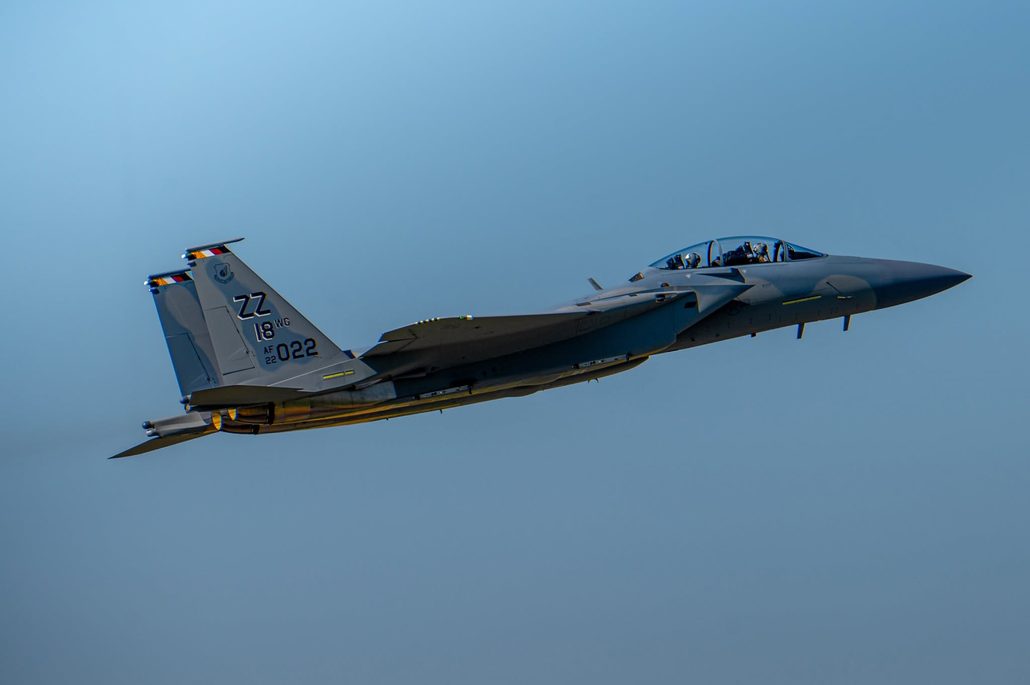
The U.S. Air Force Weapons School trains the service’s most elite tacticians. During a recent Weapons Instructor Course, the Oregon Air National Guard’s 142nd Wing demonstrated why the newest member of the Eagle family is rapidly becoming a key player in advanced combat training.
When the U.S. Air Force Weapons School calls, operational units from across the force answer. For one recent Weapons Instructor Course (WIC), the Oregon Air National Guard’s 142nd Wing answered with the Air Force’s newest air superiority fighter, the F-15EX Eagle II, delivering live-fire capabilities that added a powerful dose of realism to one of the military’s most demanding training programs.
Known as the premier graduate-level tactical training course in military aviation, the Weapons Instructor Course develops the next generation of combat leaders responsible for integrating air, space, and cyber capabilities across the battlespace. Success requires realistic scenarios, operationally relevant threats, and aircraft capable of executing missions under combat-like conditions.
The 142nd Wing provided exactly that.
Bringing Combat Realism to Training
Operating the F-15EX Eagle II, Oregon Air National Guard aircrews and maintenance personnel played a critical role in supporting Weapons School events by delivering live munitions during advanced tactical training scenarios. The participation of operational units allows Weapons School students to experience the complexities and pressures of modern air warfare in an environment that closely replicates real-world combat operations.
For students, the presence of frontline aircraft equipped with live ordnance transforms classroom concepts into practical application. Every mission becomes an opportunity to refine decision-making, command-and-control procedures, and weapons employment under realistic conditions.
The Eagle’s Newest Evolution
The F-15EX represents the latest and most capable variant of the legendary Eagle series. Combining decades of proven fighter design with advanced avionics, enhanced survivability systems, and unprecedented weapons-carrying capacity, the Eagle II provides commanders with a highly versatile platform capable of both air dominance and strike missions.
Its ability to carry a large and diverse weapons load makes the aircraft particularly valuable during large-force training exercises. In Weapons School scenarios, the F-15EX can replicate a wide range of mission sets while demonstrating how next-generation technologies integrate with existing Air Force and joint-force tactics.
For the 142nd Wing, participation in the Weapons Instructor Course also offers a valuable opportunity to expand operational experience with the new platform while contributing directly to the development of future weapons officers.

Citizen-Airmen at the Forefront
The Oregon Air National Guard has long maintained a reputation for excellence in homeland defense and expeditionary operations. As one of the first units transitioning to the F-15EX, the 142nd Wing is helping shape how the aircraft will be employed across the force.
Supporting the Weapons School underscores the increasingly important role Air National Guard units play in advanced training and force development. No longer viewed solely as a strategic reserve, Guard units routinely operate alongside active-duty forces, providing combat-ready capabilities and operational expertise.
Training for Tomorrow’s Fight
Modern air combat demands seamless integration between aircraft, weapons systems, intelligence assets, and command networks. The Weapons Instructor Course exists to ensure future combat leaders can bring these elements together effectively in high-threat environments.
By providing F-15EX aircraft and live-munition support, the 142nd Wing helped create the kind of realistic training environment necessary to prepare those leaders for future conflicts.
The Weapons School may bring the fight, but during this training evolution, Oregon’s Eagle II crews brought the thunder, demonstrating both the capabilities of the Air Force’s newest fighter and the critical contribution of the Air National Guard to America’s airpower advantage.