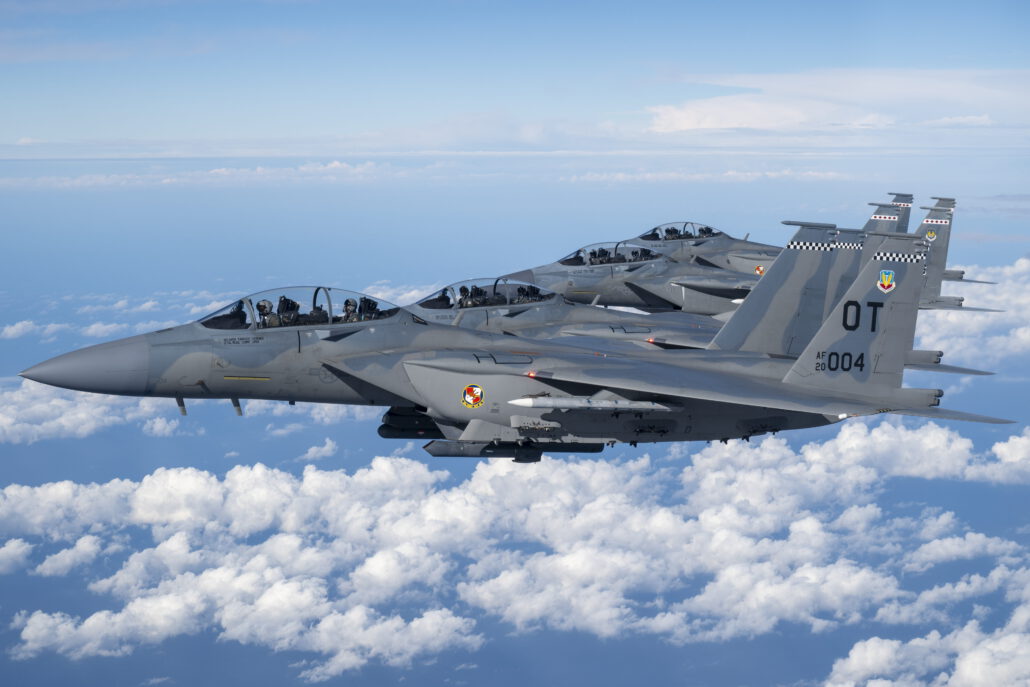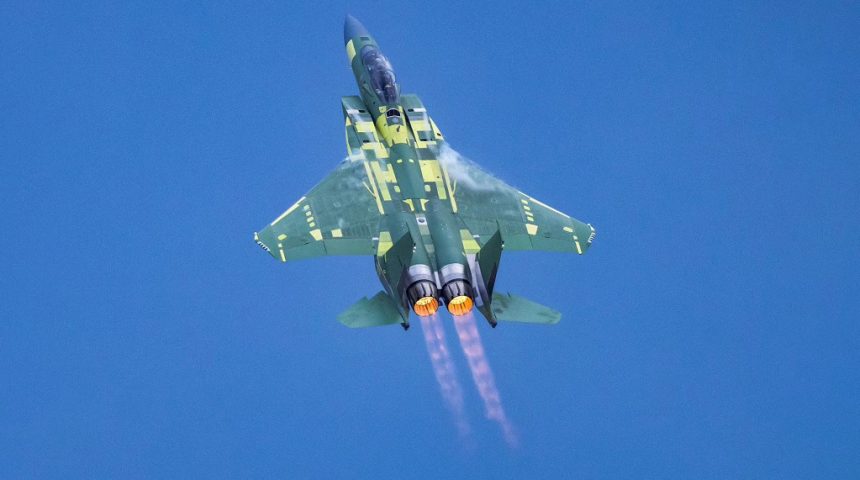
The U.S. Air Force’s newest fourth-generation-plus fighter, the Boeing F-15EX Eagle II, is set to play a pivotal role in the future of Selfridge Air National Guard Base, Michigan, bringing one of the world’s most capable air superiority and multi-role combat aircraft to the Great Lakes region. Combining the combat-proven heritage of the F-15 with cutting-edge avionics, advanced sensors, digital architecture, and unmatched weapons capacity, the Eagle II represents a significant leap forward for the Air National Guard and America’s homeland defense mission.
A Modern Eagle for a New Era
At first glance, the F-15EX appears nearly identical to earlier members of the Eagle family. Beneath its familiar lines, however, lies a dramatically transformed combat aircraft designed to dominate increasingly complex battlespaces.
Built by Boeing in St. Louis, Missouri, the Eagle II incorporates a new generation of mission systems centered around an advanced Active Electronically Scanned Array (AESA) radar, powerful mission computers, and an open-systems architecture designed for rapid future upgrades.
Former U.S. Air Force test pilot Jason Dotter, now a Boeing demonstration pilot, describes the aircraft as a fusion of proven aerodynamics and modern digital technology. More than 30 onboard computers continuously process sensor data, helping aircrews maintain superior situational awareness while reducing workload during high-threat missions.
One of the most visible upgrades is the aircraft’s large-area cockpit display. The 11-by-19-inch touchscreen functions much like a modern tablet, allowing pilots to customize information windows, manage sensors, and coordinate mission systems through a highly intuitive interface.
Equally important is the adoption of a fully digital fly-by-wire flight control system. Replacing traditional mechanical linkages with electronic controls improves handling qualities, enhances reliability, and provides the foundation for future capability enhancements.
Beyond Stealth: Survivability Through Technology
While the F-15EX was not designed as a stealth platform, its survivability strategy relies on a sophisticated combination of electronic warfare systems, advanced sensors, long-range weapons, and networked operations.
The aircraft is equipped to operate in contested environments while leveraging powerful electronic countermeasures and defensive systems to detect, identify, and counter modern threats. Combined with its exceptional speed, altitude performance, and weapons payload, the Eagle II provides commanders with a versatile platform capable of executing air superiority, homeland defense, strike, and command-and-control missions.
Why Selfridge Matters
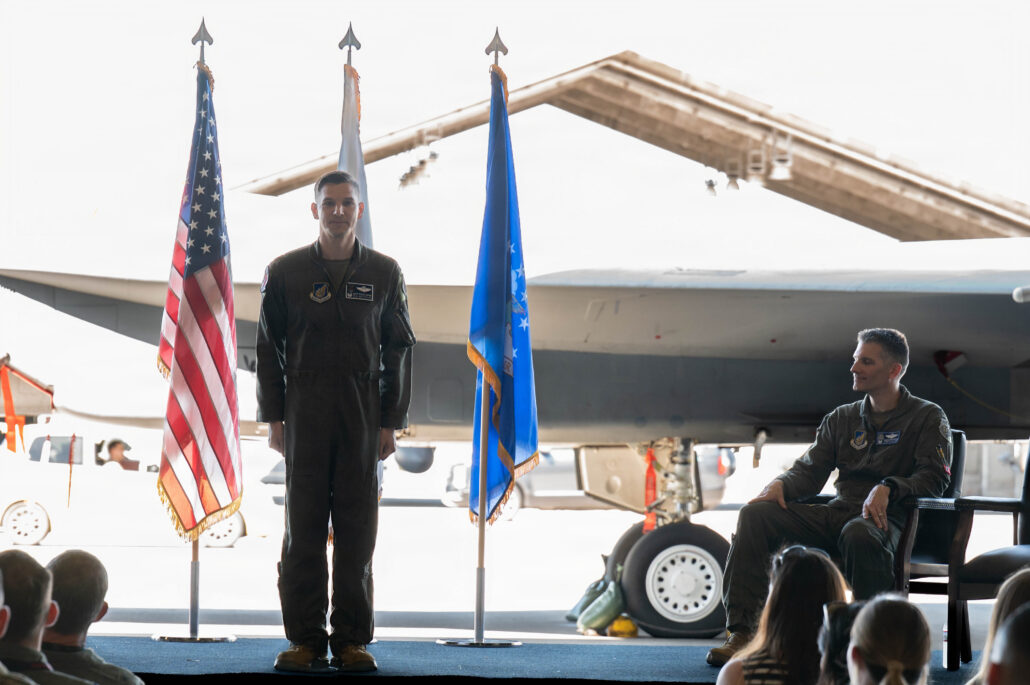
Michigan National Guard leaders recently visited Boeing’s production facilities to evaluate the aircraft and better understand the capabilities it could bring to Selfridge Air National Guard Base.
The strategic location of Selfridge makes it an ideal hub for air defense missions across the northern United States and Great Lakes region. Military planners have identified the F-15EX’s unique combination of range, endurance, and payload as particularly valuable for homeland defense operations, where rapid response and sustained patrol capability remain essential.
Michigan National Guard Adjutant General Major General Paul Rogers emphasized the extensive analysis that preceded the aircraft selection, noting that defense planners evaluated a wide range of mission requirements before identifying the Eagle II as the optimal fit for future operations.
U.S. Air Force F-15 Program Manager Jonathan Varoli likewise highlighted Selfridge’s longstanding importance within the nation’s air defense architecture and the role the base will continue to play as the Eagle II enters service.
Built on an Unmatched Combat Legacy
The Eagle II inherits the remarkable reputation of the F-15 family, one of the most successful fighter aircraft ever produced. Across decades of operational service worldwide, the Eagle has built an extraordinary combat record and remains synonymous with air dominance.
What distinguishes the F-15EX from previous variants is its ability to combine this proven combat pedigree with modern technologies that dramatically expand mission flexibility. The result is a platform capable of integrating seamlessly with fifth-generation aircraft while carrying larger weapons loads over greater distances.
Heavyweight Firepower
Among the Eagle II’s defining strengths is its exceptional payload capacity, making it one of the most heavily armed fighters in the U.S. inventory.
Key Specifications
- Maximum speed: Exceeds Mach 2
- Powerplant: Two high-thrust turbofan engines
- Length: Approximately 63.8 feet (19.4 m)
- Wingspan: Approximately 42.8 feet (13.0 m)
- Air-to-air missile capacity: Up to 12 missiles in a standard air-superiority configuration
- Internal armament: 20 mm M61A1 Gatling cannon with 510 rounds
- Cockpit: Advanced 11-by-19-inch large-area touchscreen display
This impressive combination of speed, persistence, and firepower allows the F-15EX to perform a wide spectrum of missions ranging from air defense and intercept operations to long-range strike and maritime support.
Building America’s Newest Eagle
The Eagle II is produced on Boeing’s historic fighter production line in St. Louis. Each aircraft consists of more than 20,000 individual parts and over 17,000 supplier-provided components.
Manufacturing involves assembling the forward, center, and aft fuselage sections before joining them during final assembly. Despite increasing digitalization throughout the production process, much of the aircraft’s construction continues to rely on highly skilled technicians performing precision assembly work by hand, a testament to the complexity of modern fighter aircraft production.
A Historic First for Michigan
For the Michigan Air National Guard, the arrival of the Eagle II is more than a fleet modernization effort; it represents a historic milestone.
According to Lieutenant Colonel Shannon Vickers, Operations Commander of Selfridge’s 127th Wing, the Michigan Air National Guard has never before received an entirely new-build aircraft specifically assigned to its unit. The transition therefore marks a once-in-a-generation event for both the organization and the local community.
As the Eagle II prepares to enter service at Selfridge, it promises to strengthen the base’s relevance well into the future while ensuring that Michigan remains at the forefront of America’s air defense mission. For pilots, maintainers, and the surrounding community, the aircraft’s arrival symbolizes not only modernization, but also a long-term commitment to preserving Selfridge as a cornerstone of U.S. national security.